

INC-5 – An opportunity to have a bold treaty including pollution from tobacco products and align with health frameworks
Thursday, 05 December 2024
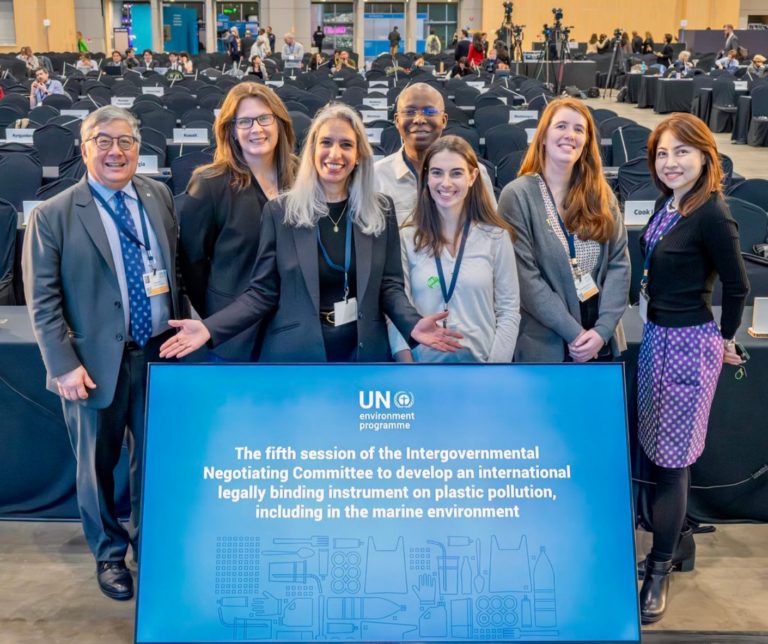
Busan, December 2nd, 2024 - The fifth and final Intergovernmental Negotiating Committee (INC5) tasked with drawing up a legally binding international treaty to put an end to plastic pollution ended on 1 December 2024 in Busan, South Korea, and failed to produce an agreement to finish drafting the first international treaty on plastics. There is general agreement to resume the session later.
Negotiations should resume on the latest version of the non-paper and as we welcome the commitment and hard work of the Member States and the Chair, the draft treaty contains several problematic elements such as the mention of ‘cigarette filters with plastic’ in Annex X. This does not include alternatives filters (such as biodegradable filters already in the market). Furthermore, products listed in Annex X are not subject to an immediate ban, but rather to a gradual phase-out. The Stop Tobacco Pollution Alliance (STPA) also deplores the lack of alignment with health treaties, particularly the WHO Framework Convention on Tobacco Control (FCTC) that could be a relevant safeguard to exclude tobacco industry’s interference.
Negotiators from more than 170 countries met for the final round of negotiations to draw up a legally binding international treaty to put an end to plastic waste by 2040. While all countries agree on the seriousness of the problem, opinions differ radically on how to tackle it.
Luis Vayas Valdivieso, Chairman of the Negotiating Committee, announced at the opening of the plenary session that more time was needed to reach an agreement. The current text, which is still too vague and indecisive on too many points. The countries meeting in Busan are deeply divided on the issue of the plastic production limit. This measure is being pushed by the High Ambition Coalition countries but blocked by the plastic-producing countries.
Vague and restrictive inclusion of cigarette filters with plastic in the current non-paper
The inclusion of plastic cigarette filters in Annex X of Article 3 of the draft treaty must be carefully considered. While we welcome the recognition of plastic pollution from cigarette butts by delegates at Busan in the provisional draft, the reference to ‘with plastic’ may be seen as an endorsement of biodegradable filters currently being promoted by the tobacco industry, which, like all filters, offer no protection for smokers’ health. This could promote misinformation because used cigarette filters, whatever their composition (plastic or non-plastic), contain up to 7,000 chemical substances and extremely dangerous toxic elements. As the filter decomposes, it releases these chemicals, which also include heavy metals and radioactive substances such as polonium, into terrestrial and aquatic environments. Having biodegradables or non-plastic filters will even tend to exacerbate their environmental impact if smokers think that throwing away a cigarette butt will no longer have an influence on the environment because it is biodegradable. Unlike other forms of plastic cigarettes-butts cannot be part of a circular economy. Hence, they cannot be feasibly recycled and there is no safe alternative to them.
Opportunity to align to other relevant health treaty such as the FCTC
Products listed in Annexes are currently priority plastics but are being phased out for over x years rather than banned immediately, which is problematic because cigarette filters need to be banned immediately, there is no reason for its existence and the cigarettes can function without filters. Keeping filters in the annexes means that a body will be established by the future Conference of the Parties that would propose guidance on priority plastics products, to assist the Parties in the implementation of this Article. This could allow the tobacco industry to be present and to seize this opportunity to become an active stakeholder in the process.
This is despite the global health agreement (Article 18 of the FCTC's COP10 ) to urge countries to ‘coordinate their efforts to combat plastic waste from tobacco products’ and to protect tobacco related environment policies from the commercial and vested interests of the tobacco industry.
Considering the relevant international agreements and guidelines under the sections on Product Design, Plastic Waste Management, Existing Plastic Pollution could ensure that this treaty overcome the increased risk of tobacco industry exploiting the environment sector for partnerships and greenwashing activities, including tobacco EPR which is prohibited in the international health guidelines due to their deceptive nature.
STPA reminds that civil society and governments—both from the environmental and the health sectors—must work together to ensure that environmental measures align with, rather than undermine, global health goals.
EU Leadership in Pushing for an Ambitious Global Plastics Treaty
Despite some constraints, the EU demonstrated commendable leadership by working alongside nations such as Panama, Fiji, Mexico, and Rwanda, ultimately rallying support from more than 100 countries to advocate for an ambitious and comprehensive treaty. This commitment underscores the EU’s dedication to tackling plastic pollution on a global scale. During an EU stakeholder meeting hosted by the Hungarian Presidency of the Council of the EU and the European Commission, the institution reiterated their strong stance on excluding the tobacco industry from treaty negotiations, acknowledging its unique and harmful role in the plastic pollution crisis.
We cannot tackle plastic pollution without addressing the role of tobacco. We must ensure that this treaty works in harmony with health frameworks like the Framework Convention on Tobacco Control (FCTC).
The only position defended by the STPA is an immediate ban on cigarette filters as they have no proven effects on health. Any other positions, such as approving filter substitutes or calling for optional or voluntary elimination or reduction, would be an advantage to the tobacco industry and would be detrimental to the global fight against the end of smoking.